Your home in Bayswater deserves a roof that not only looks sleek under the Aussie sun but also stands strong through rain and storms. Metal roofing—like Colorbond steel—is a popular, durable choice Down Under. But even the toughest roofs need a little care. Think of Metal Roofing Maintenance as a spa day for your roof: a bit of TLC now can save you a fortune later. In this guide, you and I will chat about everything from quick DIY check-ups to pro tips that keep your roof in top shape. Let’s dive in and ensure your metal roof lasts as long as your beautiful views do!
Why Metal Roofs Are So Popular (and Why Maintenance Matters)
Metal roofs shine in Bayswater for good reasons. They last for decades, fend off fire and rot, and look sharp on modern homes. As one roofing expert notes, metal roofs “withstand harsh weather conditions, including heavy rain and strong winds,” and they “require minimal maintenance”. That means less mowing of the lawn (you do love that, right?) and more peace of mind.
However, Metal Roofing Maintenance isn’t just optional—regular care prevents small issues from becoming big headaches. A tiny rust spot today could be a leaking problem tomorrow. By checking on your roof regularly (think of it like getting a quick health check for your home), you’ll keep it looking great and avoid surprise repairs.
Bayswater’s Weather: What Your Metal Roof Faces
Living in Bayswater means you get a mix of weather. Summers here can be scorchers, winters can be wet, and every now and then we might even see a wild storm roll through. Under our sky, UV rays are strong, and after heavy rains you’ll want water flowing off your roof quickly. If you’re near the coast or industrial areas, salty sea breeze or airborne pollutants can also attack that steel surface.
All these factors make Metal Roofing Maintenance especially important. Sunlight can fade the finish, and moisture combined with debris can spark rust. The upside is that metal roofs are designed for tough conditions – but even the hardest-working roof appreciates a little help. By keeping gutters clean, washing down salty or grimy spots, and inspecting your roof seasonally, you’ll fend off weathering and keep leaks at bay.
Regular Inspections: Your First Defense
A smart homeowner knows: inspect early, inspect often. Commit to poking your head up onto a ladder (safely!) or hiring a pro at least twice a year – say spring and autumn. During these visual checks, you’re looking for telltale signs of trouble. Ask yourself: Are there any loose or missing screws? Are panels warped or dented? Do I see any rust or broken seals around vents and chimneys? Those spots are common weak points.
Even if your roof looks fine from the ground, a roof plumber’s trained eye can spot subtle issues. Professionals recommend annual inspections to catch sneaky leaks or early corrosion. A small leak can hide under a ridge cap or around a flashing – an expert can find these before they burst into full-blown water damage disasters.
Key inspection tasks include:
- Checking for rust, corrosion, or flaking paint on panels.
- Looking for gaps or tears in sealant around flashings (chimney, vents, skylights).
- Ensuring screws and fasteners are tight and none are missing.
- Scanning for debris buildup in valleys or gutters that could trap water.
Staying on top of inspections is the first step to easy metal roofing maintenance. A stitch in time saves nine – or in this case, a few buckets in repair costs!
Clearing Debris and Cleaning the Roof
A metal roof shines when it’s clean. Bayswater’s gum trees, wattle, and bottlebrushes may be lovely – but their leaves, twigs, and gumnuts sure are a headache for roofs. Leaf litter and branches can sit on the roof and hold moisture, which leads to rust. Clogged gutters are even worse; water might back up under your panels if downpipes don’t drain properly.
Keep gutters and downpipes clear of leaves and debris year-round. After storms or in autumn leaf-fall, sweep out gutters so rainwater can flow freely. Also, brush or blow away any loose debris on the roof itself. It’s a simple step but hugely effective – a clean roof dries faster and never “sits in a puddle.”
For a deeper clean, grab a garden hose or soft bristle brush with a mild, soapy solution. Gently wash down the roof to remove dust, pollen, bird droppings, or algae that might cling to the surface. Use low pressure – you want to flush, not blast. Doing this wash down about once a year (or more if you live near the coast) helps maintain the finish and life of your paint.
Keeping it clean means your metal roof not only looks great but also stays rust-free and ready to keep you dry.
Checking Seals, Fasteners and Flashings
Ever notice how your metal panels are crimped around roof vents, skylights, or chimneys? That’s sealing at work. Over time, sealants can shrink, crack, or peel under the Aussie sun. Likewise, screws that hold panels together can loosen with metal expanding and contracting. A leak often starts with just one loose screw or a worn-out seal.
Every inspection, make sure:
- Sealants are intact. Check caulk and gaskets around any protrusions. If sealant looks cracked or missing, re-apply a high-quality silicone or roofing sealant.
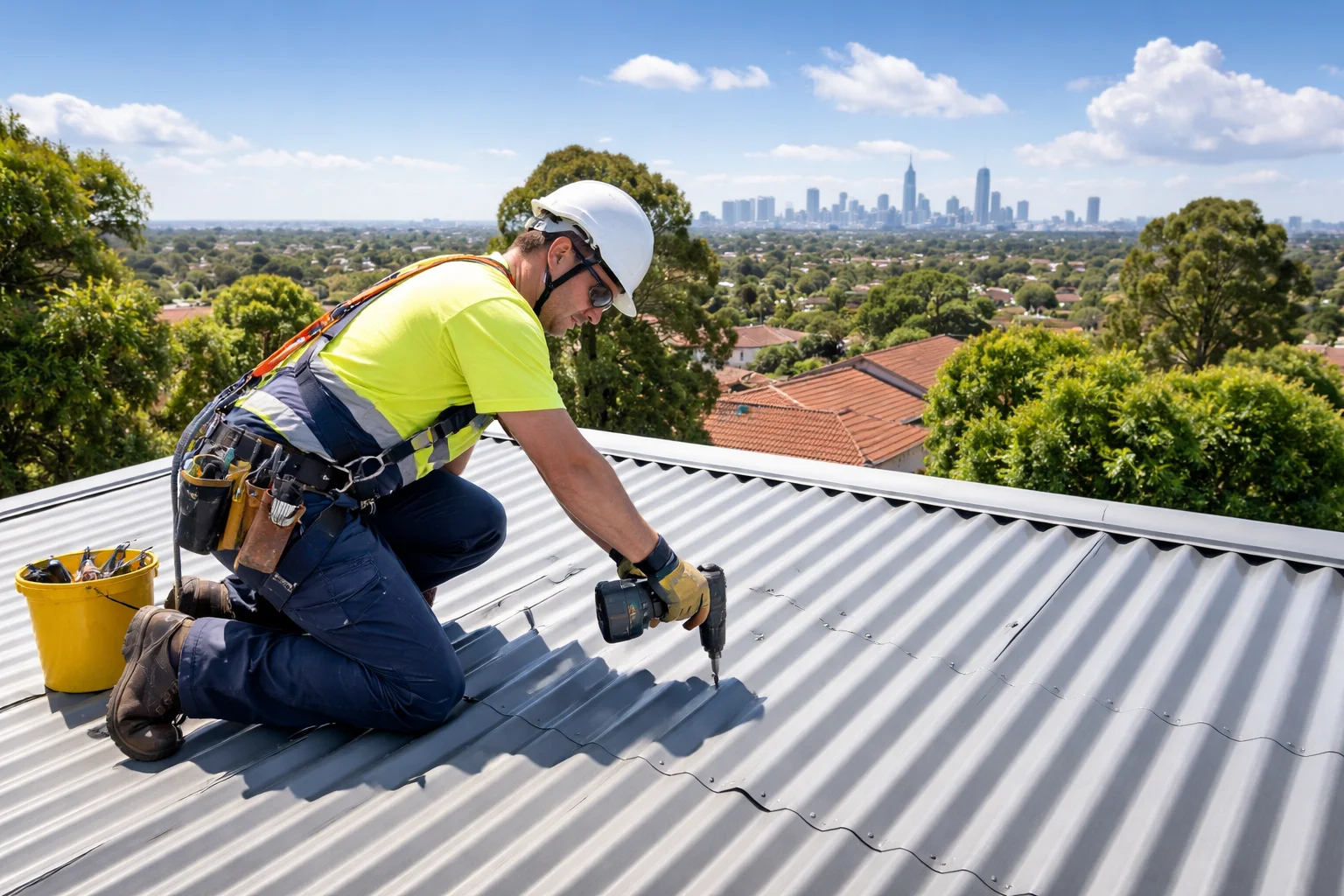
- Screws are tight. With a drill or screwdriver, gently tighten any loose fasteners and replace any that look rusty or stripped. A moving panel is a leaking panel.
- Flashing is in place. Flashing is the thin metal under edges and joins that keeps water out. Make sure it’s not bent or separated.
Doing this prevents nasty surprises. Seal it up and screw it down regularly, and you’ll keep water exactly where it belongs – outside.
- Quick checklist:
- Inspect seals around chimneys, vents, skylights – redo any old sealant.
- Go over all visible screws with a driver – tighten or replace as needed.
- Look at roof flashings (edges, ridges). Ensure they’re lying flat and overlapping correctly.
By tackling these tasks, you’re literally plugging leaks before they happen.
Hosing Down Your Roof (BlueScope’s Pro Tip)
When it comes to simple maintenance, sometimes the answer is water and a hose. BlueScope Steel (makers of Colorbond) lays it out plainly: a quick rinse with clean water goes a long way. “Simple maintenance of Colorbond steel by regular washing with clean, fresh water will…prolong its life,” they saycolorbond.com. The idea is to remove any dirt, salt, or grime before it can do harm.
Not all of your roof gets the benefit of Aussie rain. Think areas under big trees or the garage roof: these “unwashed” spots should be hosed down at least every six monthscolorbond.com. If you spot any stubborn stains or salt crust, a light scrub with a soft brush and mild detergent will brighten things up. Avoid harsh chemicals or high pressure, which can damage the paint layer.
By scheduling a seasonal roof wash, you’re following the experts’ advice. It’s an easy job that really pays off: a clean roof stays cooler and more corrosion-free, extending those metal roofing maintenance intervals even longer.
Rust Prevention and Quick Fixes
First, know that some steel roofs have rust-resistant coatings, but nothing is totally rust-proof if neglected. Rust is like a weed: ignore it and it spreads. The moment you notice a little rust spot on your roof, grab a wire brush and gently scrub it away. Then, clean the area, apply a rust-inhibiting primer, and slap on some matching roof paint. Easy, right? Treating rust early stops it from eating through the steel.
For future prevention: keep the protective coating on your metal in good shape. If paint flakes or scratches off (maybe from a falling branch or a flying toy), repair it. You can find touch-up paint from your roofing supplier that matches your roof’s colour. Think of it like sunblock for your steel – reapplying a fresh layer every few years (or after big storms) helps prevent water and oxygen from meeting that bare metal.
In summary:
- Spot fix rust immediately. Wire-brush, prime, paint. Don’t let it spread.
- Maintain the coating. Keep paint intact; apply new sealant/coating if large areas look worn.
- Watch out for corrosion zones. Areas near the coast or chemical plants should get extra attention and maybe a yearly protective washcolorbond.com.
A well-maintained color coating essentially makes your roof rust-free by default – just stay on top of it.
Gutters, Waterflow & Drainage
Your metal roof’s job is to shed water – and gutters are the highway that carries it away. Clogged gutters and downpipes force water to pool at the roof’s edge, which can leak back under your panels over time. As the CBT Roofing guide points out, ensuring “gutters and downspouts are free of blockages” is essential.
Do this regularly:
- Remove leaves and twigs from gutters (broom, scoop, or gently with your gloved hand). Check after big storms and at season changes.
- Ensure downpipes are flowing. Run a hose down them and watch the water pour out freely. If it pours slowly or overflows, snake or clear the blockage.
- Look for rust or holes in gutters themselves. Metal gutters can rust too, so patch any pinholes with sealant or consider a rust-resistant replacement if needed.
Also check the roof’s slope and drainage points after heavy rains. If you ever see water pooling on the roof (small puddles at seams or flat areas), that’s a red flag. Water left standing can lead to leaks or rot under an otherwise metal roof. If pooling is an issue, call a professional to adjust the pitch or install extra drains.
Taking care of your gutters and drainage means rain runs off fast – and that means you can relax and enjoy the Aussie downpours, knowing your roof won’t.
Tree Trimming and Vegetation Control
Tall trees might look great in your backyard, but if their branches are brushing your roof, they’re doing damage in disguise. Branches rub on panels, scratching off paint and making way for rust. They also drop leaves and sap that can cling to the surface. The CBT guide wisely advises: “Trim any tree branches that hang over the roof” to avoid scratches and debris.
So, grab the loppers or call an arborist and keep branches at least a couple of meters away. This is especially important before storm season. In a big wind, a lone branch can come down and dent your roof or crack a gutter. By scheduling a tree trim every year or two, you prevent a lot of headaches.
Also watch out for vines or creepers. They look pretty, but if they climb onto a roof, their roots can wedge under flashing. Keep your creepers on the walls, not on the roofline.
Seasonal Maintenance Checklist
Keeping your metal roof happy is easiest when it’s part of your regular routine. Here’s a quick seasonal checklist to keep handy:
| Season | Tasks |
| Spring (Sep–Nov) | Inspect roof panels and gutters after winter storms; clean off moss or algae if any; clear debris from spring winds. |
| Summer (Dec–Feb) | After any heatwaves or storms, hose the roof down; check for paint damage or blistering from intense sun. |
| Autumn (Mar–May) | Remove fallen leaves from roof and gutters; tighten any loose screws; ensure sealants are still intact. |
| Winter (Jun–Aug) | Clear gutters before heavy rains; inspect for leaks during drizzly weather; freshen up any minor rust spots. |
No matter the season, after big storms or bushfire smoke, take a moment to glance over your roof. Sticking to this schedule keeps small problems from catching you off guard.
Combine this calendar approach with our maintenance checklist (inspect, clean, seal, tighten, clear) and you’ll nail metal roofing maintenance year-round.
DIY vs. Calling in the Pros
Many metal roof tasks you can do yourself with basic tools and safety. If you’re comfy on a ladder and the roof is single-storey, you might handle gutter cleaning, debris removal, and visual checks. Just remember: safety first! Use a sturdy ladder on even ground, don non-slip shoes, and don’t hoist yourself up in wet or windy weather.
That said, some jobs are best for professionals:
- Steep or tall roofs: If it’s a multi-storey home or steep pitch, leave it to the licensed roofers. They have harnesses and know how to move safely.
- Major repairs: Patching large holes, replacing a section of roof, or fixing severe rust damage is better done by the experts. They also ensure any warranties stay valid.
- Time & convenience: No shame in hiring help! If weekends are precious, a roof plumber can knock out an inspection and clean much faster.
Brisbane’s weather or Melbourne’s “four seasons in a day” can change plans fast. A good roof pro will also spot things you might miss (like that one wobbling tile or a barely-there drip) and can recommend high-quality paints or coatings. Weigh the cost of a pro against the peace of mind you gain – it’s often worth it.
Trendy Tips: Cool Roofs and Solar Panels
Want to make your metal roof not just durable, but also smart? Start with paint colour. Light colours reflect heat – that’s the idea behind “cool roofs.” Bayswater’s council even has a policy promoting cool roof coatings with a maximum solar absorbance of 0.45. Translation: pale greys or creams can keep your home cooler, reducing air-con bills. When you repaint or touch up, consider a high-reflectivity colour or thermal coating. It feels good to stay cool by staying bright.
Another trend: solar power integration. Metal roofs are great for solar panels – they’re sturdy and long-lived. If you’re planning solar, do it before repainting, or add panels during maintenance. Bonus: panels shade parts of the roof from sunlight, which might slightly reduce heat stress (though keep roof clean under panels too). Also, check that any solar clips don’t rust or loosen.
Lastly, some people go full zen with their roof: plant a rooftop garden, or install rainwater tanks that match the roofing profile. These require extra planning and upkeep, but if you’re into eco-living, metal roofs pair well with green innovations.
Whatever the trend, the core of Metal Roofing Maintenance stays the same: keep it clean, cool, and checked. Stay current with new products (cool coatings, advanced sealants, etc.) and ask your roofing supplier for any hot tips on the latest developments.
Conclusion
Caring for your metal roof in Bayswater doesn’t have to feel like a chore. With a bit of regular attention—inspecting, cleaning, and tightening things up—you can keep that roof looking sharp and doing its job for decades. From the first rinse of fresh water to a quick rust fix, each small step adds up to big savings on energy bills and repairs.
Now you have the ultimate guide in hand: follow it season by season, and treat your metal roof like the hero it is for your home. If you ever feel unsure, don’t hesitate to book a pro inspection—prevention is always easier than repair. Here’s to dry homes, happy roofs, and stress-free seasons ahead. Keep calm, carry on shining, and let your roof shine on!
FAQs About Metal Roofing Maintenance
-
How often should I inspect my metal roof?
Aim for at least twice a year (spring and autumn). Check after big storms too. Frequent checks catch small issues early.
-
Can I clean my metal roof myself?
Yes, with caution. For one-storey homes, you can hose it down or scrub with a soft brush and mild soap. Always work on a dry, cool day and use safety gear. If unsure or your roof is high/steep, hire a professional.
-
What are signs my metal roof needs maintenance?
Look for debris or rust spots, loose or popped screws, damaged sealant, and clogged gutters. Also check for dented panels or any leaks in the attic after rain.
-
How do I remove rust from my metal roof?
Gently wire-brush the rust spot, clean the area, then apply a rust-blocking primer and matching touch-up paint. Treat rust spots quickly before they spread.
-
Are metal roofs really low maintenance?
Compared to other roofs, yes! Metal roofs last a long time with minimal fuss. You still need to keep them clean and inspect them, but tasks are usually quick and infrequent (thanks to metal’s durability).