Ever woken up to find your backyard turned into a lake after a night of heavy rain? If so, you’re not alone – even short, intense downpours can overwhelm a Bayswater home that isn’t prepared. I still remember one wild weekend when rain poured in sheets and my neighbour’s front yard became a pond. That’s when I realized stormwater drainage solutions are like giving your house a full-time umbrella. Stormwater Drainage Solutions can be the difference between dry carpet and a soggy couch. In this article, I’ll chat about how professional Stormwater Drainage Solutions protect Bayswater homes and keep floods at bay.
Climate change is making these heavy rains more common. In other words, a downpour that felt like a minor nuisance 20 years ago can now quickly turn into serious flooding. Stormwater Drainage Solutions are getting harder to ignore, so it pays to be proactive. After all, good Stormwater Drainage Solutions are your cheapest flood insurance.
Common Stormwater Issues for Homeowners
- Backyard Flooding: See that big puddle by your fence? Even a gentle slope can fail, causing water to pool against your house. Over time, standing water can seep through walls or even enter your home.
- Overflowing Gutters: Clogged or undersized gutters spill water everywhere instead of channeling it. This runoff can saturate the ground next to your home or splash onto walls and windows.
- Foundation Damage: Excess moisture can weaken or crack your foundation. Soaked soil can expand and shift, putting odd pressure on walls and floors.
- Mould and Rot: Damp areas from poor drainage are perfect for mould, rot and even termites. A soggy beam or wall can quickly start decaying.
- Plant Stress: Too much water drowns roots and washes away soil. A lawn that looks like a swamp isn’t just ugly – it’s a warning.
- Insurance Hassles: Repeated water damage can hike your premiums or even make your home hard to insure. Insurers may require proof that you’ve implemented good stormwater drainage solutions to cover any flood claims.
- Mosquitoes and Pests: Stagnant water is mosquito heaven and can attract rodents or snakes. Proper drainage means fewer bugs and a healthier yard.
All these issues underscore why good Stormwater Drainage Solutions are crucial for protecting your home.
Gutters and Downpipes: The First Line of Defence
A downpipe discharges rainwater from the roof into a soak well.
Before adding complex fixes, start with the basics: keep your gutters clean and pointing away from the house. Gutters are cheap heroes: one of the simplest stormwater drainage solutions your house can have. A gutter overflow is basically an invitation for moisture to pool under your walls, which nobody wants. Consider adding gutter guards or screens to block leaves and help keep those systems clear. Your gutters are the first Stormwater Drainage Solution – they collect roof rain and funnel it through downpipes safely away from foundations. If a downpipe pours straight into your yard, consider adding a splash block or rock trench to spread the flow. Trust me, a little gutter TLC (Tender Loving Cleaning) can save you a lot of trouble later.
Soakwells and French Drains: Digging Deeper
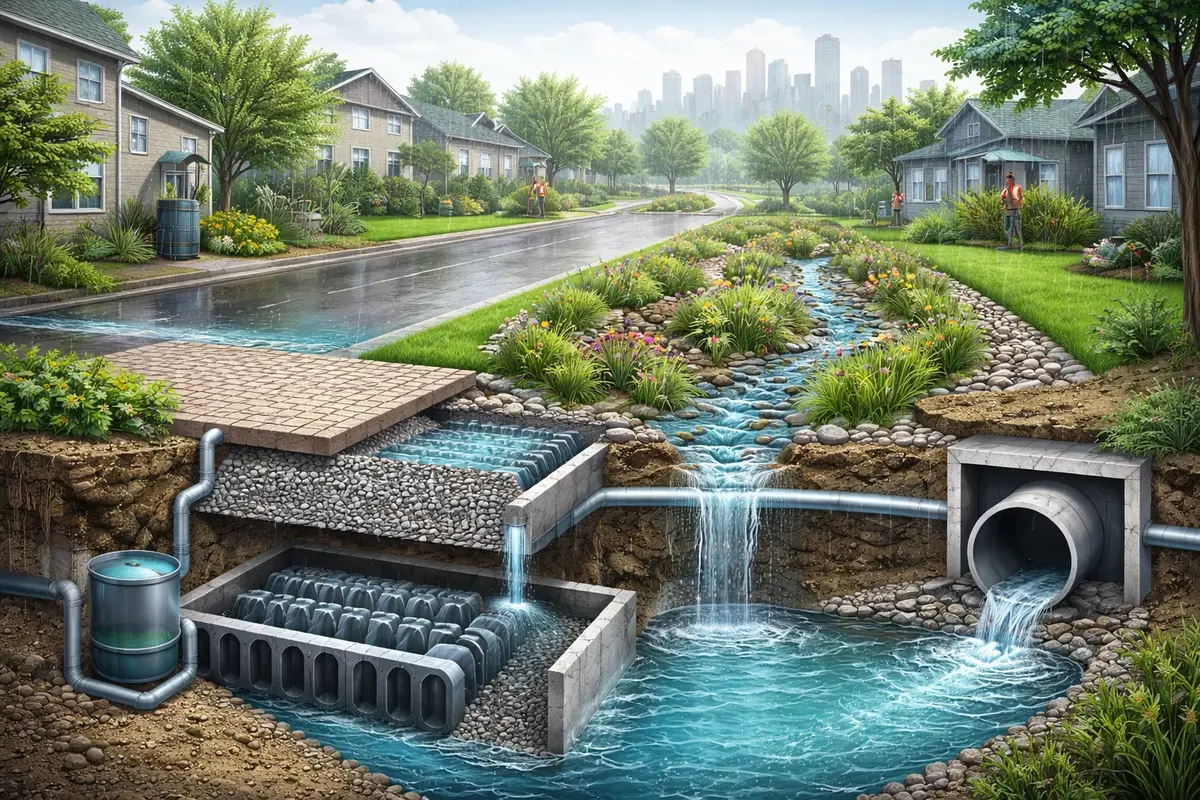
Soakwells and French drains are among the most effective Stormwater Drainage Solutions for stubborn runoff. A soakwell (or soak pit) is basically a big underground bowl that captures rainwater and lets it slowly seep into the ground. Typically connected to your gutter system via a PVC pipe, a soakwell fills up in a downpour and then drains gradually. Local engineering guidelines even size these pits for a 1-in-10-year storm, using about 12.5mm of rainfall in the math. If your soil doesn’t drain well, a French drain (a trench filled with gravel and a perforated pipe) can channel excess water to a safe soakaway. These earth-friendly stormwater drainage solutions work by pushing water deep into the soil, away from your home’s foundation. Just remember: soakwells need maintenance too. Keep the inlet pipes and lids clear of debris, and if your yard is still a muddy mess days after a storm, the soak pit might be clogged or undersized. And don’t forget the weep holes or overflow pipes: any soakwell should have a way to handle extreme rain without backup.
| Solution | Best for | Pros | Cons |
| Gutters & Downpipes | Roof runoff | Inexpensive, simple | Needs regular cleaning |
| French Drain | Wet walls or soggy yards | Effectively redirects water | Requires trenching |
| Soakwell/Soakpit | Capturing yard runoff | Stores water for infiltration | Needs space & good soil |
| Surface Drain (Trench) | Driveways, patios | Immediately removes surface water | Can be a trip hazard |
| Sump Pump | Basements, low areas | Actively pumps out water | Depends on power, backups |
| Rain Garden | Gentle rainfall filtration | Adds greenery, filters water | Requires plant maintenance |
| Permeable Paving | Driveways, walkways | Reduces runoff by absorption | Higher install cost |
This table compares common methods.
Surface Drains and Sumps: Clearing the Way
A street stormwater drain cover – part of the network that moves runoff away.
Another approach is to remove water at the surface. Channel drains (those long, grated gutters on driveways and patios) catch runoff and send it into the ground or a storm network. In very low-lying homes, a sump pump in a small pit can even eject water upward, away from foundations. Why all this effort? Water Corporation notes that drains collect stormwater runoff after rain to help protect properties from flooding. Think of it like giving your house an expressway out of the flood zone. Taken together, these methods make up a complete stormwater drainage solution for your property.
Green Infrastructure: Rain Gardens and More
Not all fixes are drains and pipes. You can also go green: for instance, rain gardens or swales. A rain garden is a shallow, planted bed (often with water-loving native plants) that captures runoff and lets it soak in naturally. Permeable paving (porous concrete blocks or gravel driveways) is another neat trick, allowing water to drain through the surface. Collecting rainwater in tanks at downpipes catches roof runoff for later use – that both saves water and reduces the sheer volume pouring onto your yard during a storm. These eco-friendly stormwater drainage solutions not only manage water, they also beautify your property and support local wildlife. Waterwise councils and home landscapers love these because they combine form with function. Plus, plants thrive instead of drowning, and you help keep pollutants out of our creeks.
Professional Drainage Services: When to Call the Experts
So should you hire a pro? Usually, yes. Professional Stormwater Drainage Solutions take the headache out of it. Councils (including ours) take stormwater rules seriously. For example, Town of Bassendean’s stormwater policy explicitly states that “Stormwater must be contained on-site”. In practice, that means before you hook into a street drain, the council expects you to use soak pits, trenches or rain gardens first. Experienced plumbers and landscapers know these rules inside-out. They can spot issues early (like hidden low spots or clay layers) and install the right mix – sizing pipes, soakwells and pumps correctly. At Royal Flushed Plumbing & Gasfitting, we handle everything from trenching a French drain to configuring a sump pump with battery backup. We even deal with council permits and inspections, so you don’t end up with surprise fines. As I like to say, let the experts handle the tricky piping and paperwork so you don’t get stuck with unexpected puddles (or fines!).
Conclusion
In short, stormwater drainage solutions are your home’s secret weapon against flooding drama. Stormwater Drainage Solutions like clean gutters, proper grading, and well-designed soak pits add up to big protection when heavy rain hits. For Bayswater homeowners, think of stormwater drainage solutions as insurance for your house – far cheaper than an emergency repair later. Don’t wait until you’re bailing water by hand or squeegeeing out your basement! If you’re ready to weatherproof your property, consider chatting with the pros at Royal Flushed Plumbing & Gasfitting. So don’t let another storm surprise you – invest in top-notch Stormwater Drainage Solutions today! So, for any homeowner reading this, remember: Stormwater Drainage Solutions are as essential as a roof over your head. In other words, investing in Stormwater Drainage Solutions now is much smarter than paying for flood damage later. For example, Stormwater Drainage Solutions often top the list of smart home improvements after a flood.
Read Also: The Ultimate Guide to Metal Roofing Maintenance in Bayswater Homes
Frequently Asked Questions
-
What are stormwater drainage solutions and why do I need them?
“Stormwater drainage solutions” is just a fancy way of saying all the systems that move rainwater away from your home (gutters, drains, pits, gardens, etc.). You need them because each heavy rain is a test: without proper drainage, water can flood your yard, crawlspace or walls. Good solutions (like well-placed French drains and soakwells) keep your house dry and save on expensive flood repairs.
-
How do I know if my home’s drainage needs work?
Look for signs: standing water around the house, frequent backyard or garage flooding, or damp spots on walls after rain. If puddles aren’t disappearing quickly or your landscaping is eroding, your drainage might need an upgrade. Basically, if water ever lingers where it shouldn’t, it’s time to improve your system.
-
How often should I maintain my drainage system?
Inspect and clean your gutters and downpipes at least twice a year (more if you have lots of trees). After big storms, check drains and pits to ensure they’re clear. And every few years, have a licensed plumber peek at hidden parts of the system – stormwater drainage solutions with many components can hide an issue until the next heavy rain.
-
Is installing these systems expensive?
It can be an investment, but think of it as insurance. Simple fixes (gutter guards, sloping soil away from the house, splash blocks) are cheap. More involved systems (large pits, pumps, trench drains) cost more upfront but save on flood repairs later. In the long run, good Stormwater Drainage Solutions pay for themselves by avoiding damage costs. (Plus, some councils or utilities even offer rebates for water-saving or drainage projects.)
-
Can I DIY these solutions or do I need a pro?
Basic tasks like clearing gutters or adding downpipe extensions are DIY-friendly. But for major installs (large soak pits, buried drains, sump pumps, or when a permit is needed), a licensed plumber or contractor is best. Professionals know local codes, proper sizing, and tricks to make solutions last. They’ll make sure your Stormwater Drainage Solutions meet council requirements and actually work – so you don’t end up with code violations or surprise puddles.